
Most learning and development teams don't need convincing that engaging e-learning is better than a collection of slides with a Next button. They understand the value of interaction, scenarios, gamification and giving learners opportunities to apply what they've learned.
The difficulty is often finding the budget to deliver it.
When a training requirement lands on an L&D team's desk, there may already be a fixed deadline, a limited budget and a considerable amount of content that needs to be covered. The ideal learning experience might involve branching scenarios, animated demonstrations or interactive challenges, but the reality is that the project needs to be delivered quickly and affordably.
That doesn't mean the finished course has to feel like a compromise. Some of the most effective improvements to e-learning come from creative decisions that have relatively little impact on production time or cost.
Good design can do more than make a course look attractive
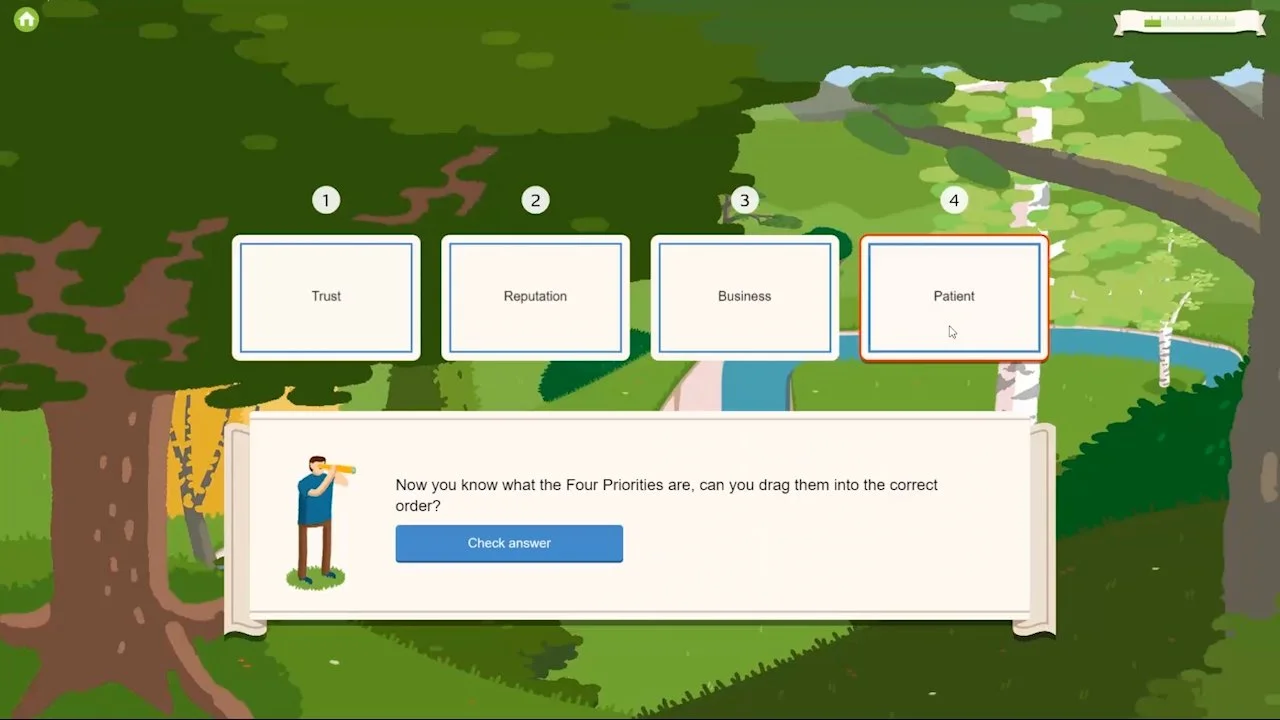
When budgets are tight, visual design can sometimes be treated as something to address once the content has been assembled. The priority becomes getting the information onto the screen, making sure everything is accurate and producing a working SCORM package.
But the way information is presented has a considerable influence on how easily learners can follow it.
A well-designed course uses layout, typography, colour, imagery and visual hierarchy to make the content easier to navigate and understand. It helps learners recognise what's important, understand how different ideas relate to one another and move through the material without unnecessary effort.
This doesn't necessarily require elaborate animation or bespoke illustration. A consistent visual language, thoughtful use of space and carefully chosen imagery can make relatively straightforward content feel considerably more engaging.
For us, good design is part of the learning experience itself, rather than something added at the end to make the slides look better.
Creativity isn't always about adding more functionality
It's easy to associate creative e-learning with sophisticated interactions, particularly when looking at examples from larger learning programmes. But creative thinking can also be applied to the structure and presentation of much simpler courses.
A complicated process might be easier to understand when presented as a visual sequence rather than several paragraphs of explanation. A policy update could be introduced through a familiar workplace situation. A technical concept might benefit from a single clear diagram that explains something more effectively than several screens of text.
Sometimes the most useful creative decision is recognising what can be removed.
When an L&D team is working from an existing presentation or subject matter expert's notes, the material may have been organised around what needs to be communicated rather than how somebody will learn it. Restructuring that information into a more coherent journey can make a substantial difference without requiring additional functionality.
Making limited interactivity count
Of course, there are occasions when interaction is exactly what a course needs. The question becomes where it will have the greatest value within the available budget.
If a project can only accommodate one or two interactive elements, we'd rather see those used where learners need to make a decision, practise a process or check their understanding than distributed throughout the course simply to create activity.
A well-considered scenario or knowledge check can give learners an opportunity to think about how the information applies to their work. Even relatively simple interactions can be useful when they are closely connected to the learning objectives.
The same principle applies to gamification. A full game-based learning experience may be outside the scope of a smaller project, but elements such as progression, feedback, challenges and a sense of achievement can still influence how a course is structured.
The creative opportunity is to make the available production budget work harder rather than trying to squeeze an ambitious specification into a project that cannot realistically support it.
Working with the content you already have
One of the biggest opportunities to control e-learning production costs is making better use of existing material.
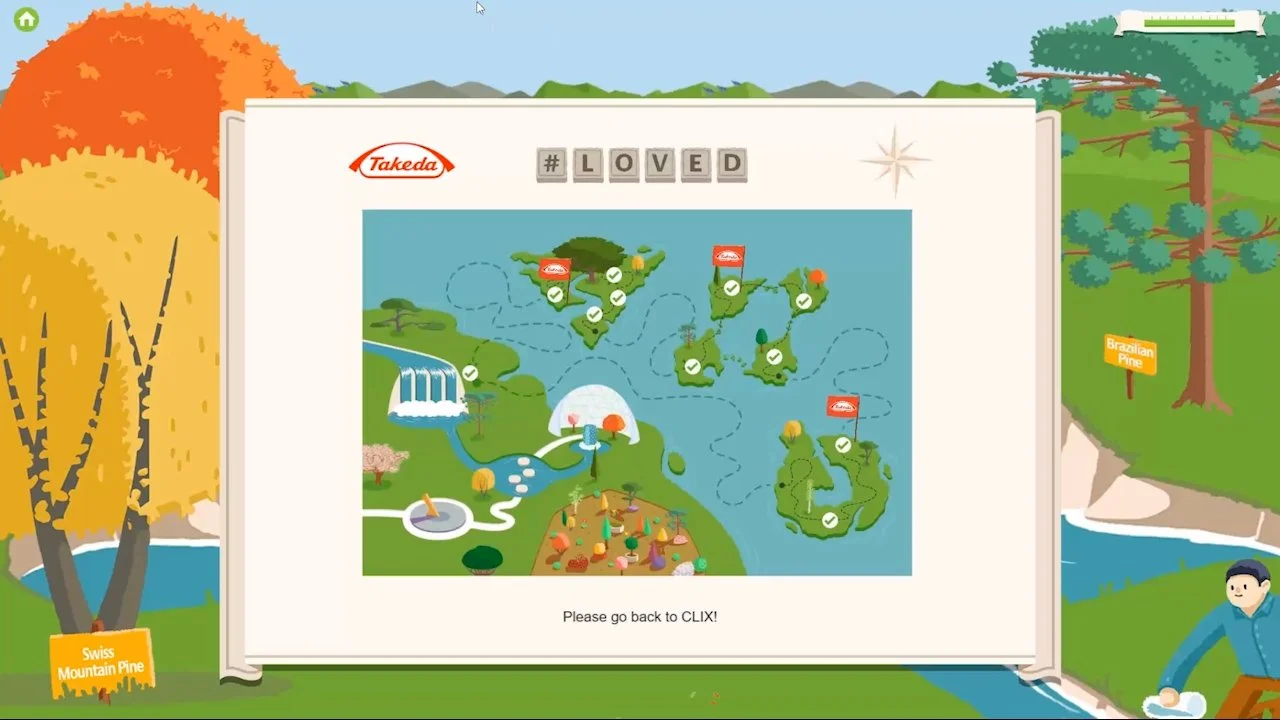
Most organisations already have presentations, training manuals, policy documents, videos and other resources that contain much of the information needed for a new course. Starting with those assets can reduce the amount of development required, although they often need considerable editing and restructuring before they work as self-directed learning.
An existing PowerPoint, for example, might provide the foundations of a course, but simply transferring the slides into an e-learning authoring tool rarely makes the best use of the format.
We would look at how the content can be organised, which sections would benefit from a visual explanation and where a small amount of interaction might improve understanding. Existing diagrams, illustrations and video assets can often be adapted rather than recreated.
This is particularly useful for organisations producing regular training updates, where maintaining consistency and controlling costs are ongoing priorities.
Making the most of a modest e-learning budget
At Sliced Bread Lite, we regularly think about how to make creative production more efficient without losing the qualities that make the finished work effective.
Our approach to e-learning starts with understanding what the learner needs to take away from the course and then finding a practical way to communicate it within the available time and budget.
Sometimes that involves developing a short, focused module from existing content. In other cases, it might mean introducing better visual design, simplifying a complicated explanation or adding a carefully chosen interactive element.
We're also conscious that many L&D teams need to maintain and update their courses after launch. A straightforward, well-designed module that can be revised efficiently may offer better long-term value than something technically ambitious that becomes difficult or expensive to maintain.
Having a smaller budget shouldn't mean abandoning creative thinking. In many ways, the constraints make those decisions more important.
Good e-learning doesn't have to be complicated
There will always be training projects that justify more sophisticated interactions, simulations and gamified experiences. For others, a shorter and simpler approach is entirely appropriate, particularly when the requirement is to communicate an update, introduce a process or provide focused knowledge.
The important thing is not to confuse simplicity with a lack of creativity.
A course can be relatively straightforward in its functionality while still being thoughtfully structured, visually engaging and enjoyable to work through. Good design, clear communication and a little imagination can make a noticeable difference, even when the budget doesn't stretch to everything on the original wish list.
At Sliced Bread Lite, that's the challenge we enjoy: finding creative, practical ways to produce e-learning that looks good, communicates clearly and works within the realities of the project.
Better E-Learning, Without a Bigger Budget
Working with a limited budget doesn't mean your training has to look or feel basic. At Sliced Bread Lite, we combine creative thinking, thoughtful design and efficient production to help you get more from your e-learning budget.
Have a training project in mind? Get in touch and let's see what we can do with it.
