

AI Video Editing for Business: Where Automation Saves Time and Where Experience Still Matters
Video has become a regular part of business communications, but the way organisations produce it hasn't always kept pace. Marketing teams need social content, internal communications departments are creating regular updates, and business leaders are increasingly expected to appear on camera. Much of this content is relatively straightforward, yet even a short video can involve a surprising amount of editing.
Removing pauses, cleaning up a recording, adding captions, finding suitable supporting footage and creating different versions all take time. For organisations producing content every week, these smaller tasks can quickly consume a significant amount of the production budget.
This is one area where AI video editing is beginning to make a practical difference. At Sliced Bread Lite, we're interested in how these tools can make production more efficient, particularly when they allow experienced editors and creative teams to spend less time on repetitive work and more time improving the content itself.
Why AI video editing is becoming part of the production workflow
Video editing has traditionally involved a fairly manual process. An editor reviews the footage, identifies usable sections, assembles the sequence, adjusts the timing and adds whatever supporting graphics, captions or sound are required.
Professional editing software has become increasingly sophisticated, but many of the basic production tasks still require time and attention.
AI-assisted tools are changing parts of this workflow. Automatic transcription allows editors to work directly from spoken dialogue, silence detection can identify unnecessary pauses, and speech recognition can help generate captions without having to type everything manually.
These developments are particularly useful for businesses producing regular short-form content. A weekly update from a managing director, a product introduction or a short explanation from a subject specialist may not require a complex post-production process, but it still needs to be clear, well-paced and suitable for its intended audience.
The challenge is deciding which parts of that process can sensibly be automated and which still benefit from human judgement.
Making more of the videos businesses already create
One of the most practical applications of AI video editing is preparing short, presenter-led content for social media and digital communications.
Many businesses now record people speaking directly to camera, whether that's a company founder discussing a new product, a consultant sharing expertise or a member of the marketing team explaining a service.
The recording itself may take only a few minutes, but preparing it for publication involves several additional decisions. The opening needs to establish the subject quickly, the pacing should hold the viewer's attention, and captions need to be accurate and readable, particularly when the video is watched without sound.
Tools such as CutRoom AI have been developed specifically for this type of content. CutRoom takes a short spoken recording and automates elements of the editing process, including removing pauses, generating an opening hook, adding captions and selecting supporting B-roll. Its transcript-based interface also allows users to make adjustments without working directly on a traditional editing timeline.
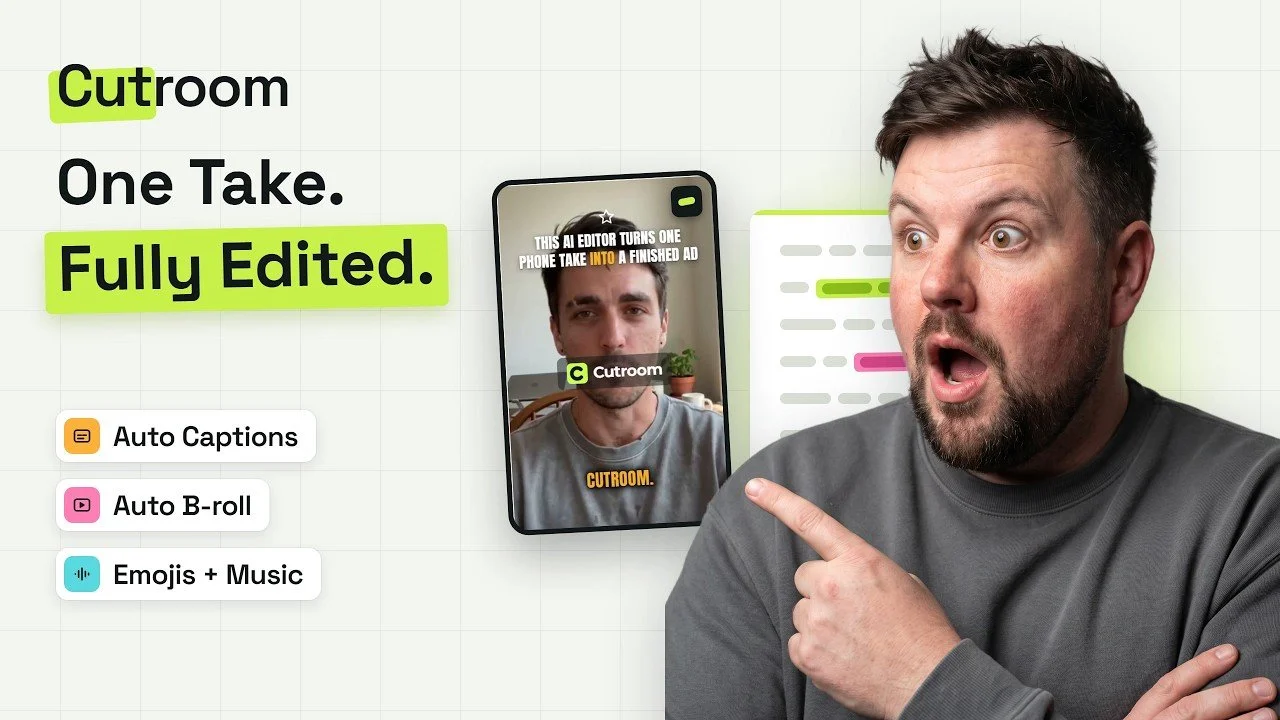
For a small marketing team producing regular vertical videos, this kind of automation could remove a considerable amount of routine editing work. It's also an example of how AI is becoming more useful when it concentrates on a particular production task rather than attempting to replace an entire creative workflow.
Where automation works well
The benefits of AI editing tend to be most noticeable when the source material and intended output follow a predictable format.
Talking-head videos are a good example because the main structure is already established by the speaker. The software can identify spoken sections, reduce unwanted gaps and prepare captions without needing to make complex editorial decisions about multiple scenes or narrative sequences.
Automated captioning is particularly useful, although the output still needs reviewing. Technical terminology, names and industry-specific language can easily be misunderstood, which is especially relevant for businesses working in healthcare, engineering or other specialist sectors.
AI-assisted B-roll selection is another interesting development. Supporting footage can make a relatively static presentation more engaging, particularly when it illustrates a product, process or subject being discussed. However, relevance matters more than simply adding visual variety, and footage should always be checked for accuracy and suitability.
In our experience, the most useful production tools are those that make routine tasks easier while leaving enough flexibility for an editor to refine the finished content.
Where experienced video editors still make the difference
There is a considerable difference between preparing a straightforward talking-head video and editing a corporate film that needs to communicate a complex message.
A company might have several interviews, existing footage, product demonstrations, graphics and a detailed communications brief. Deciding how those elements should fit together requires an understanding of the audience, the message and the purpose of the film.
An experienced editor makes decisions about what to include, what to remove and how the story should develop. They may restructure an interview to improve clarity, identify where animation would explain something more effectively or recognise that a particular section needs additional context.
Brand consistency also requires attention. Automated tools may provide templates and styling options, but organisations with established motion guidelines often need much closer control over typography, animation, transitions and graphic treatments.
This is particularly important when video content is being produced across different departments and suppliers. A quick social video might benefit from automation, while a product launch, training film or corporate explainer may require a more carefully designed approach.
Combining AI tools with professional video production
For us, the interesting question is how AI fits into an existing production workflow.
There are plenty of opportunities to use automation without compromising the creative decisions that make a video effective. Transcription can speed up the initial review of interview footage, automated captions can provide a useful starting point, and AI-assisted editing can make it easier to prepare shorter content for different channels.
At Sliced Bread Lite, our approach to video editing is built around helping businesses get professional content produced efficiently. Sometimes that means making straightforward changes to an existing video, while other projects involve restructuring footage, introducing motion graphics or creating a series of assets from material the client already owns.
AI tools can support those processes, but the appropriate workflow depends on what the content needs to achieve. There is little value in adding technology to a production simply because it's available, particularly when a more conventional editing approach would be quicker or provide better control.
The most useful applications are generally the ones that solve a specific production problem.
Choosing the right approach for your video content
Businesses considering AI video editing should start by looking at the type of content they produce most frequently.
If the requirement is regular short-form presenter videos, an automated editing platform may be a sensible option. It can help a small team publish consistently without needing to spend hours working on each recording.
If the requirement involves multiple sources, detailed storytelling, bespoke motion graphics or strict brand requirements, professional editing will usually provide greater flexibility.
There is also room for both approaches within the same organisation. A marketing team might use an AI tool to prepare quick social updates while working with a production studio on campaign films, explainers and more involved corporate communications.
As these tools develop, we expect the distinction between automated and traditional workflows to become less rigid. Editors are already using AI-assisted features within professional production software, and specialist platforms are making some previously time-consuming tasks accessible to people without editing experience.
For businesses, the opportunity is to use these developments selectively, making everyday video production more manageable while continuing to invest creative expertise where it makes the greatest difference.
Making video production more efficient
The growing range of AI video editing tools is giving businesses more options for producing content at different levels of complexity and budget.
For regular short-form videos, automation can help remove repetitive production tasks and make publishing more manageable. For content that requires a stronger narrative, more detailed visual treatment or careful brand control, experienced editors remain an important part of the process.
At Sliced Bread Lite, we see these approaches working alongside one another. By combining efficient production workflows with professional editing and motion graphics, we can help organisations get more from the content they create, without making every project more complicated than it needs to be.
