
From User Manual to Engaging Elearning
How to Turn Complex Content into Something People Will Actually Use
Large user manuals are common across organisations. They are often detailed, accurate and essential, but they are rarely engaging. When documents run into hundreds of pages, most people do not read them in full. Instead, they skim, search or avoid them altogether.
The challenge is not the quality of the information. It is how that information is delivered. When content is dense and difficult to navigate, it becomes harder for teams to absorb and apply what they need to know.
The good news is that with the right approach, even the most complex manuals can be transformed into structured, engaging learning that supports real understanding.

Why user manuals often fall short
User manuals are usually written to be complete rather than accessible. They include everything, from detailed processes to edge cases and technical explanations. While this level of detail is valuable, it can overwhelm the reader.
In many cases, manuals are also written from a system or product perspective, rather than the user’s day to day experience. This makes it harder for learners to connect the content to what they actually need to do.
As a result, important information is often missed, misunderstood or not applied in practice.
Start by breaking content into manageable parts
The first step in transforming a large manual is to break it down into smaller, focused sections. Instead of treating the document as one continuous piece, identify key topics and group them into clear, logical modules.
Each module should focus on a single objective. This might be completing a task, understanding a process or following a specific procedure. By structuring content this way, learners can access what they need quickly without feeling overwhelmed.
This also makes the content easier to build into e-learning modules, short videos or structured learning journeys.
Focus on what people actually need to do
Not every detail in a manual needs to be included in training. The priority should be on actions and decisions. What does the learner need to do, and what do they need to know to do it correctly?
By focusing on real tasks, the content becomes more relevant and easier to follow. Instead of presenting information in isolation, it can be framed around real scenarios that reflect how people use the system or process in practice.
This shift from information to action is what makes learning more effective.
Use simple visuals to support understanding
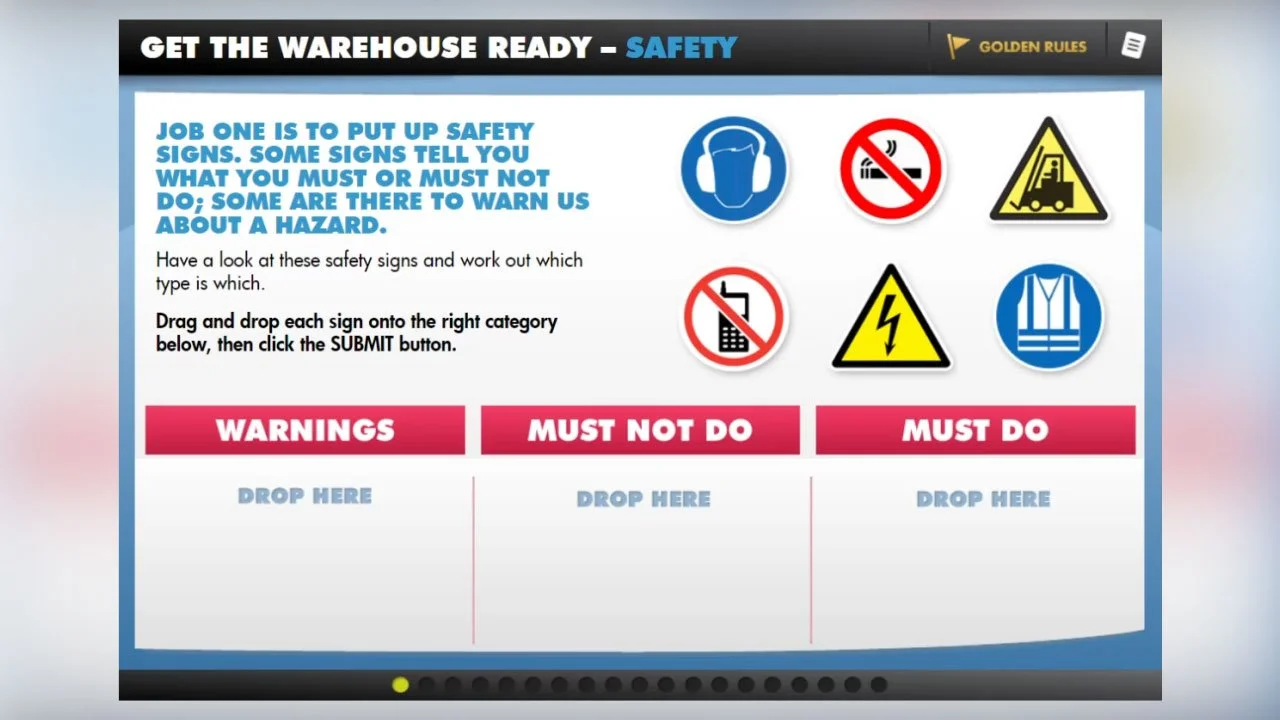
Visual elements can significantly improve how complex information is understood. Diagrams, icons, step by step graphics and short animations can help break down processes that might be difficult to follow in text alone.
Motion graphics and short video segments are particularly useful here. They allow you to guide the learner through a process in a clear and structured way, reducing the need for long written explanations.
The goal is not to replace all text, but to support it in a way that makes the content easier to absorb.
Introduce structure and flow
A well structured learning experience helps guide the learner from one point to the next. This might include short sections, clear headings, simple navigation and logical progression through the content.
Adding light interaction can also help reinforce understanding. This does not need to be complex. Simple decision points, knowledge checks or step based activities can encourage learners to engage with the material rather than passively reading it.
How Sliced Bread Lite supports content transformation
At Sliced Bread, we regularly work with organisations that need to turn large volumes of technical or process driven content into structured elearning.
Our focus is on simplifying complexity, helping teams move from dense documentation to clear, usable training that supports real outcomes.
Through Sliced Bread Lite, we apply a streamlined approach that allows this transformation to happen quickly.
We break content into manageable modules, storyboard it into a clear structure and use visual elements to support understanding. The result is learning that is easier to follow, quicker to produce and far more likely to be used.
Why Choose Sliced Bread Lite?
We’re a streamlined branch of Sliced Bread Animation, a studio trusted by brands like Sony, Coca-Cola, Nestlé, and Unilever. Sliced Bread Lite was built specifically to meet growing demand for fast, reliable content using the latest AI powered tools, to get the job done without brand compromise.
Finally…
When time is tight and you need content now, Sliced Bread Lite gets it done - fast. You don’t have to choose between quality and speed. You just need the right partner.
Got a project that can’t wait? Get in touch today for a quote and we’ll get to work right away.
